
Investment Casting Tolerance Standards
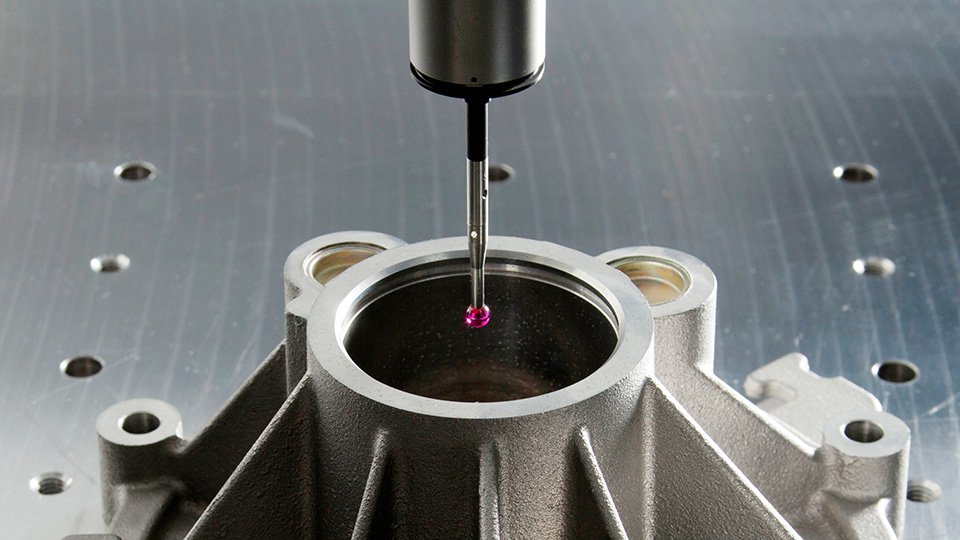
Eagle Precision Cast Parts provides detailed guidance on investment casting tolerances to help ensure your design will meet functional and inspection standards before tooling begins.
We specialize in investment casting solutions that strike a balance between design freedom and dimensional accuracy, delivering complex components with minimal post-processing requirements. Our standard tolerance guidelines are designed to give engineers a clear path from concept to production-ready castings.
Eagle Precision’s Investment Casting Tolerances
| CATEGORY | STANDARD / RANGE |
|---|---|
| Linear Dimensions – Standard Tolerance | ±0.005″ per inch typical Add ±0.010″ for heavier sections or unsupported spans |
| Wall Thickness | Small castings: 0.030″–0.060″ Medium & large castings: 0.080″–0.100″ |
| Flatness & Straightness | Flatness: 0.005″ per inch of length Straightness: Add 0.010″ for thicker sections or long, unsupported features |
| Raised Features (Text, Logos, Numbers) | Minimum height: 0.020″ Best definition when raised inside a recessed pad |
Eagle Precision’s Investment Casting Tolerances
| CATEGORY | HOLE SIZE RANGE | MAX DEPTH | MIN CORNER RADIUS |
|---|---|---|---|
| Through Holes | 0.040″–0.080″ | 2× diameter | — |
| 0.081″–0.200″ | 3× diameter | — | |
| 0.201″–0.400″ | 4× diameter | — | |
| Blind Holes | 0.040″–0.120″ | 0.5× diameter | 0.5× diameter |
| 0.121″–0.400″ | 1× diameter | 0.060″–0.090″ | |
| >0.400″ | 2× diameter | 0.090″–0.180″ |
Minimum Design Features
| FEATURE | SPECIFICATION |
|---|---|
| Recommended Fillet Radius | As large as practical |
| Outside Corners | Minimum 0.030″ radius |
| Uniform Wall Thickness | Strongly recommended |
| Draft | Not required, but may assist ejection on wax tooling |
Surface Finish Expectations
| FEATURE | STANDARD |
|---|---|
| Surface Finish | 125 RMS |
| Typical Weight Range | 1 oz to 85 lbs |
| Maximum Part Dimensions | Up to 24″ × 24″ |
Eagle Precision castings often require little to no post-processing due to the quality of the mold and wax systems used.
Design Considerations for Optimal Castability
To reduce stress concentrations and support better casting flow, we recommend:
- Generous Fillet Radii: Use the largest radius practical for your geometry
- Outside Corners: Allow at least 0.030″ radius where possible
- Uniform Wall Thickness: Helps with mold fill and cooling consistency
- Avoid Sharp Transitions: Reduces the risk of internal shrinkage or defects
For more detailed planning support, including simulation-based feedback before tooling, visit our Investment Casting Process and Quality pages. We also recommend reviewing our ISO/Certifications page to understand how our quality systems support dimensional accuracy.
Download Our Full Tolerance Guide
Need this info in a handy format? Download the Eagle Precision Investment Casting Quick Reference Guide, which includes:
- Dimensional tolerance tables
- Alloy compatibility
- Design tips for investment casting
- Process capabilities overview
Ready to Optimize Your Design?
Reach out to the Eagle Precision team for a design review, or request a quote today to start casting with confidence.